Somewhere, you’ve likely encountered the idea that consciousness doesn’t really do anything, that it’s a kind of glow around the machinery, real enough to notice, but no more causally important than the whistle on a steam locomotive. That idea has a name — epiphenomenon — and it has a specific author: Thomas Henry Huxley, Darwin’s own public advocate, writing in the nineteenth century. It’s an interesting metaphor. It’s also physically impossible, and we’ll show you why in the first few minutes of this conversation.
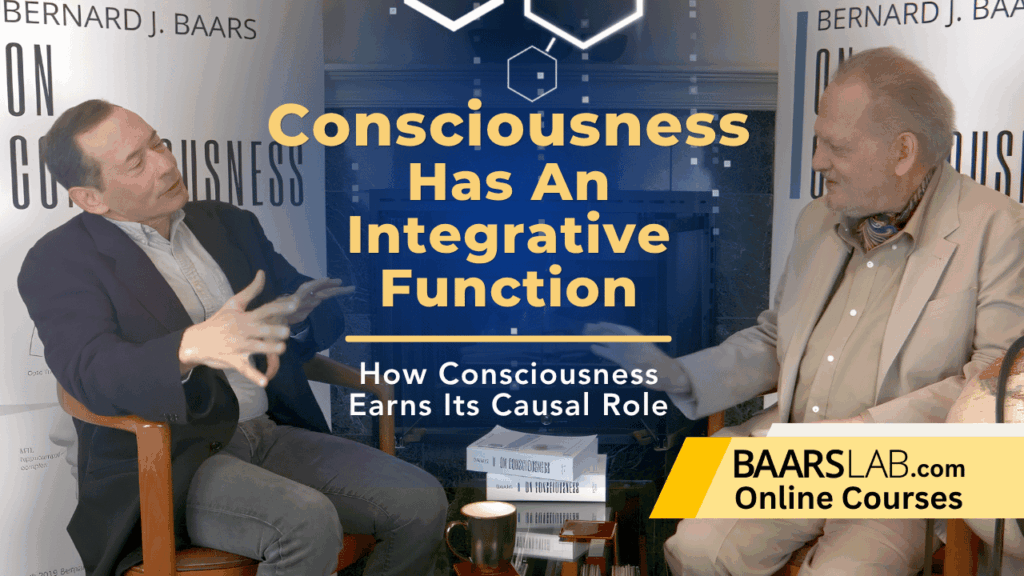
David Edelman is a neuroscientist, son of Nobel Laureate Gerald Edelman, and someone who has spent a career thinking about exactly this question from the inside of a biologist’s toolkit — so he and Bernard Baars took Huxley’s whistle apart together. If consciousness doesn’t cause anything, it couldn’t have been shaped by evolution; there would have been nothing for natural selection to act on.
So a more compelling question is posed instead: if consciousness is causal, what is it actually for?