






- On-Demand Courses in Mind & Brain Science
Deepen Your Understanding
Consciousness is one of science’s greatest unsolved questions — and most courses barely scratch the surface.
Baars Lab Online Courses give you the frameworks, evidence, and language used by the world’s leading brain scientists.
Advance Your Knowledge on Consciousness & the Brain
What's lost without this understanding?
Consciousness is a fundamental scientific question of life, not an abstract philosophical puzzle. Every experience you have is a journey in consciousness.
And yet so many people who work in neuroscience, psychology, cognitive science, and AI still spend their careers talking around it — borrowing imprecise language, sidestepping the challenging questions, and quietly hoping nobody notices the gap at the center of their field. That gap has a cost.
Intellectually, it means working with frameworks that can’t fully account for current medical evidence demonstrating what the brain is actually doing. You can map neural correlates, model decision trees, and cite the literature — and still have no coherent story for how and why any these activities are connected to conscious experience.
Professionally, elucidating its biological and psychological bases could therefore pave the way for major breakthroughs in basic science and clinical medicine. It also means being caught flat-footed in the conversations that matter most.
Philosophically, such an understanding would have profound implications as we continue to organize enormous waves of evidence from decades of careful, rigorous work. More importantly, the stakes are highest for understanding your own inner life and behavior.
The question is whether you’re ready to learn.
- Bernard Baars & GWT in the media
Building Intelligent Machines Helps Us Learn How Our Brain Works
By George Musser
GWT has long been a case study of how neuroscience and AI research play off each other.
In the 1980s Baars put forward GWT as a theory of human consciousness. “I learned a great deal from AI my whole career, basically because it was the only viable theoretical platform that we had,” Baars says.
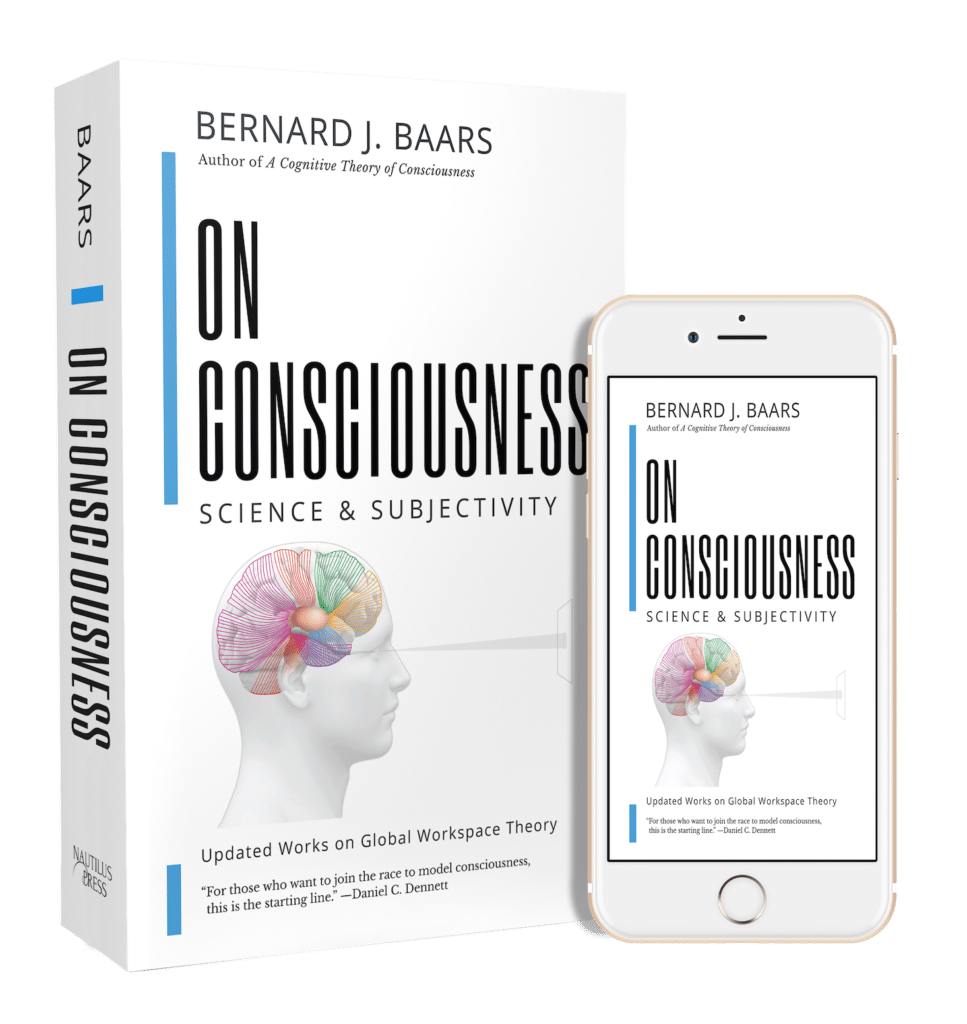
One provocative hypothesis is that consciousness is the common ground. According to Global Workspace Theory (GWT), consciousness is to the brain what a staff meeting is to a company: a place where modules can share information and ask for help.
GWT is far from the only theory of consciousness out there, but it is of particular interest to AI researchers because it conjectures that consciousness is integral to high-level intelligence.
To do simple or rehearsed tasks, the brain can run on autopilot, but novel or complicated ones—those beyond the scope of a single module—require us to be aware of what we’re doing.
Researchers at Google DeepMind, Anthropic’s Jack Clark and Jack Lindsay, and others including Yoshua Bengio, Ben Goertzel, Rufin VanRullen, and Ryota Kanai have incorporated a global workspace into their AI systems.
For the Student
Build the theoretical foundation that most graduate programs should teach
For the Researcher
Gain the conceptual vocabulary to speak fluently across cognitive science, neuroscience, and philisophy of mind
For the Curious Mind
Finally understand what the science of consciousness says, and why it matters
- Learn at your pace → Think like a brain scientist
Free Preview
- Cognitive Neuroscience
- Medicine, Psychology
- Information Sciences
- Life Long Learners
- Video & Audio Lessons
- Quizzes
- PDF Transcripts
- Journal Articles
- All Levels
- 20min to 6 hr courses
Start learning today with one of the founders of the modern science of consciousness.
Gain a deeper understanding of the dynamic aspects of conscious cognition and the complexities of the living brain in new online courses with one of the field's leading thinkers, Dr. Bernard Baars.
These Courses are for you if you’re interested in, or if you teach or study or write about any of the following subjects:
- Cognitive Science
- Psychology & Psychiatry
- Neuroscience & Neurobiology
- Neurology & Neurosurgery
- The Humanities
- Philosophy of Mind
- Computational Science & AI
- Neural Networks
- Psychophysics
- Contemplative Science
Trusted by Academics. Enroll Today!
Learn With Leading Thinkers
What does modern science know about the brain basis of consciousness?
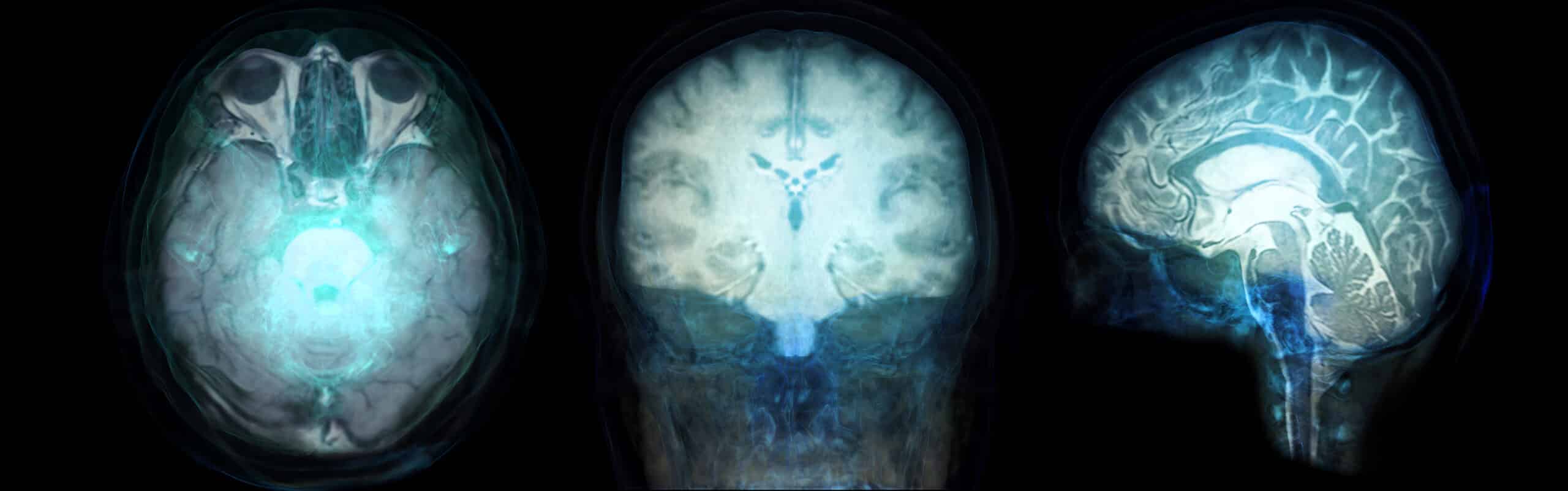
Direct observation of brains, starting with Wilder Penfield in the 1930s, shows that conscious experiences can be evoked in the cortex – the largest, most interconnected organ in the brain. Cortex is the most hyper-adaptable region of the brain, and reflects evolutionary, ontogenetic, epigenetic, and consciously-mediated learning and adaptation.
The story of consciousness is the story of cortex – in dialogue with unconscious cortico-thalamic and extra-cortical functions.
We now have definitive evidence for that understanding, which has been historically hard to pin down because the cortex is the most adaptable organ in the body.
The cortex is adaptable at numerous levels of analysis — the most obvious being the dynamic activities that support learning, problem solving, and our consciousness at this very moment.