

Develop Expertise In
Psychology, Neuroscience, Cognitive Science, AI

Shareable Certificate
Add to LinkedIn profile or resume

English
with downloadable transcripts & PDFs of assigned reading
Psychology, Neuroscience, Cognitive Science, AI
Add to LinkedIn profile or resume
with downloadable transcripts & PDFs of assigned reading
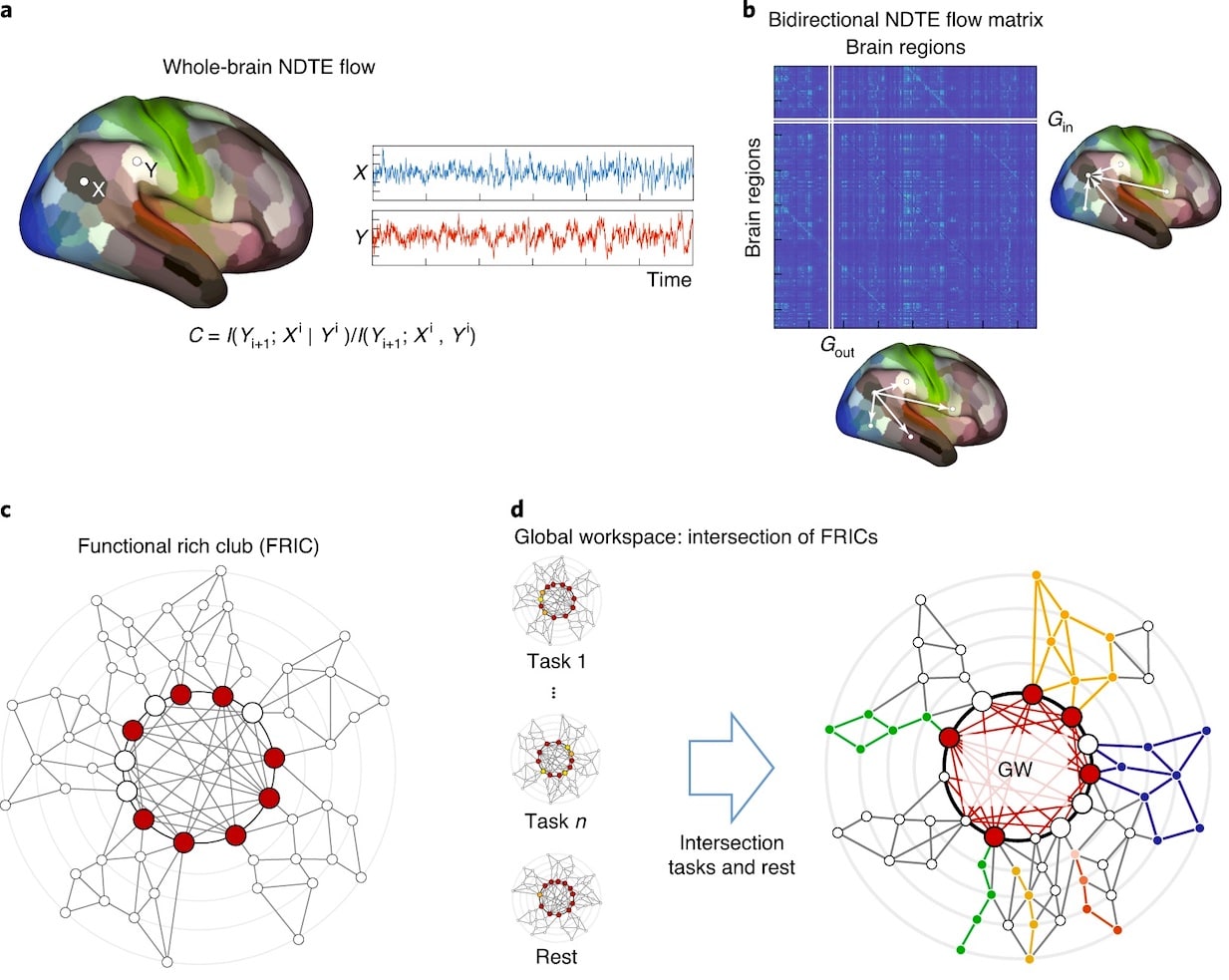
In this cognitive neuroscience course, you will be introduced to many fundamental brain regions and their functions.
Along with the historical origins and current evidence supporting GWT, you will learn about
The course includes media-rich lectures & discussion videos, assigned reading, enrichment activities, and quizzes to help you expand your knowledge of the scientific study of mind and brain. By the end of this course, you will have an advanced understanding of conscious cognition and its many roles in the brain.
6 Videos + 23 Lessons + Quizzes + Activities + PDF Downloads
Modern science started in the Renaissance, when pioneers like Galileo founded the science of physics. Defining consciousness scientifically is similar to Galileo’s efforts to define gravity and heat. (Science fans should keep in mind that physics is still working on understanding gravity.)
Video 19 Min + 22 Min reads to complete + Quiz
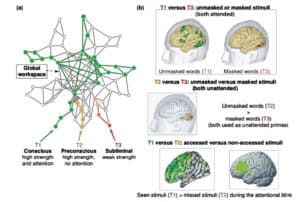 Global Workspace Theory (GWT) started in the 1980s as a purely psychological theory of conscious cognition, and has become a leading approach in scientific studies of consciousness (Mashour et al., 2020).
We use GWT to explore the numerous functions of consciousness in every day life,
in sensory perception and reasoning, and in creative problem solving. Careful empirical science always begins with observational definitions that point to the questions of interest.
Two decades of brain discoveries have helped to fill in our previous understanding that was only based on psychological evidence. (Figure Credit: Dehaene & Changeux, 2011).
Video 10 Min+ 24 Min reads to complete + Quiz
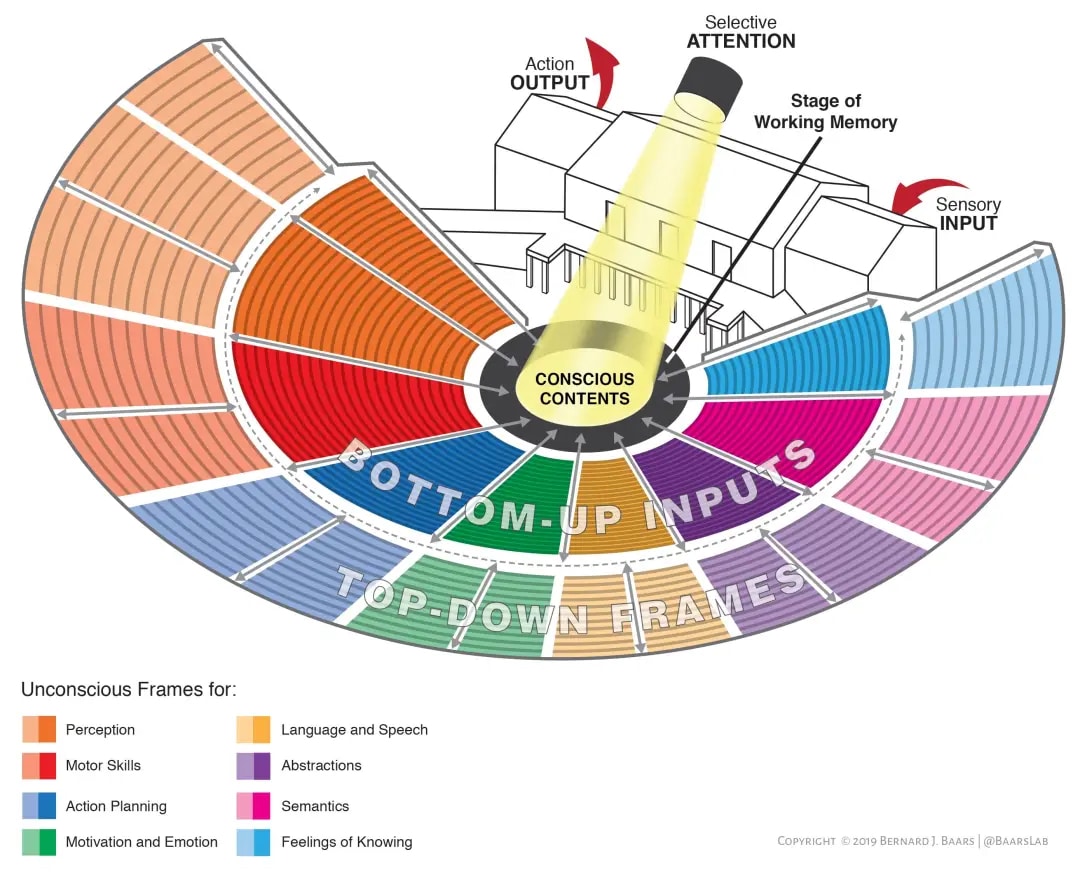 Why does a theater provide a useful metaphor for thinking about consciousness and the brain?
Conscious awareness is like a bright spotlight in a dark theater, while the darkened parts of the theater include many unconscious processes. Scientific theories often begin with thought-provoking analogies that suggest new ideas and experiments.
Video 23 Min+ 38 Min reads to complete + Quiz
Video 25 Min + 44 Min reads to complete + Quiz
Many people misunderstand Global Workspace Theory (GWT) to predict a single anatomical center in the brain for the global workspace of consciousness. However, visual consciousness does not emerge in the brain in the same place as auditory consciousness. The different kinds of consciousness, therefore, require different neural bases.
A global workspace integrates multiple sources of information into a single, unified gestalt, and then spreads that summarized information to the rest of the brain.
Video 10 Min + 28 Min read to complete + Quiz
When scientists returned to the conscious brain, medical applications started to appear quickly. After almost a century of neglect we are seeing a significant scientific renaissance. Global Workspace Theory (GWT) continues to help clarify a wave of new evidence and theory.
18 Min reads to complete + Milestone!


Psychobiologist, FAU

Neuroscientist, UC Davis
Cognitive Science & AI Systems Specialist
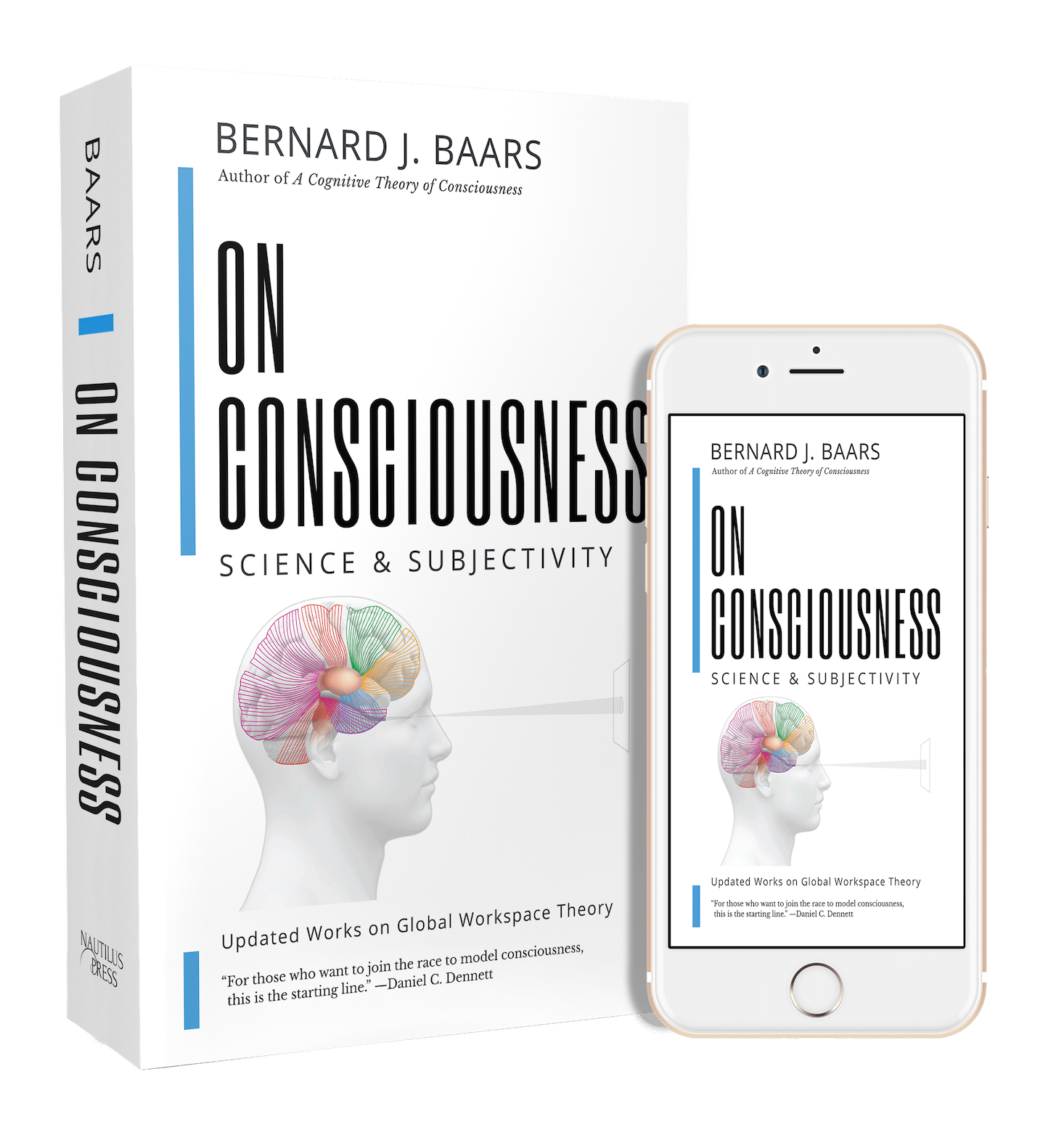
Course Foundation