
PREFACE. Is the cortex the sign of the “conscious” mind?

If the cortex is the index of consciousness, then it suggests that all vertebrates with cortex have at least some kind of consciousness.
The most ancient kinds of consciousness are plausibly sensory, beginning with the olfactory and taste senses and emerging in mammals with vision, hearing, and body touch. These conscious senses constantly interact with corresponding motor systems so that we can talk about sensory-motor consciousness, which leads to voluntary control of waking actions.
This well established chain of inference strongly suggests that consciousness is not rare, it is not confined to human beings, and its evolutionary history and phyletic breadth across numerous animals is very great indeed. Neurobiologists have been telling us this, somewhat quietly, but very clearly. (See below.) This realization will certainly disturb some people, but the evidence is simply not questioned in biology and similar sciences.
Empirical studies of conscious brains have already had major medical and biological and psychological implications. For example, Dr. Steven Laureys has conducted years of studies on patients in coma, resulting in a much better understanding of the varieties of pathological unconsciousness due to brain damage. New treatments have emerged from that work (Lane & Laureys, 2020).*
The cortex is the “organ of mind,” both conscious and unconscious aspects.
For example, vision and audition involve conscious sensory experiences, while stored memories are not conscious until they are recalled.
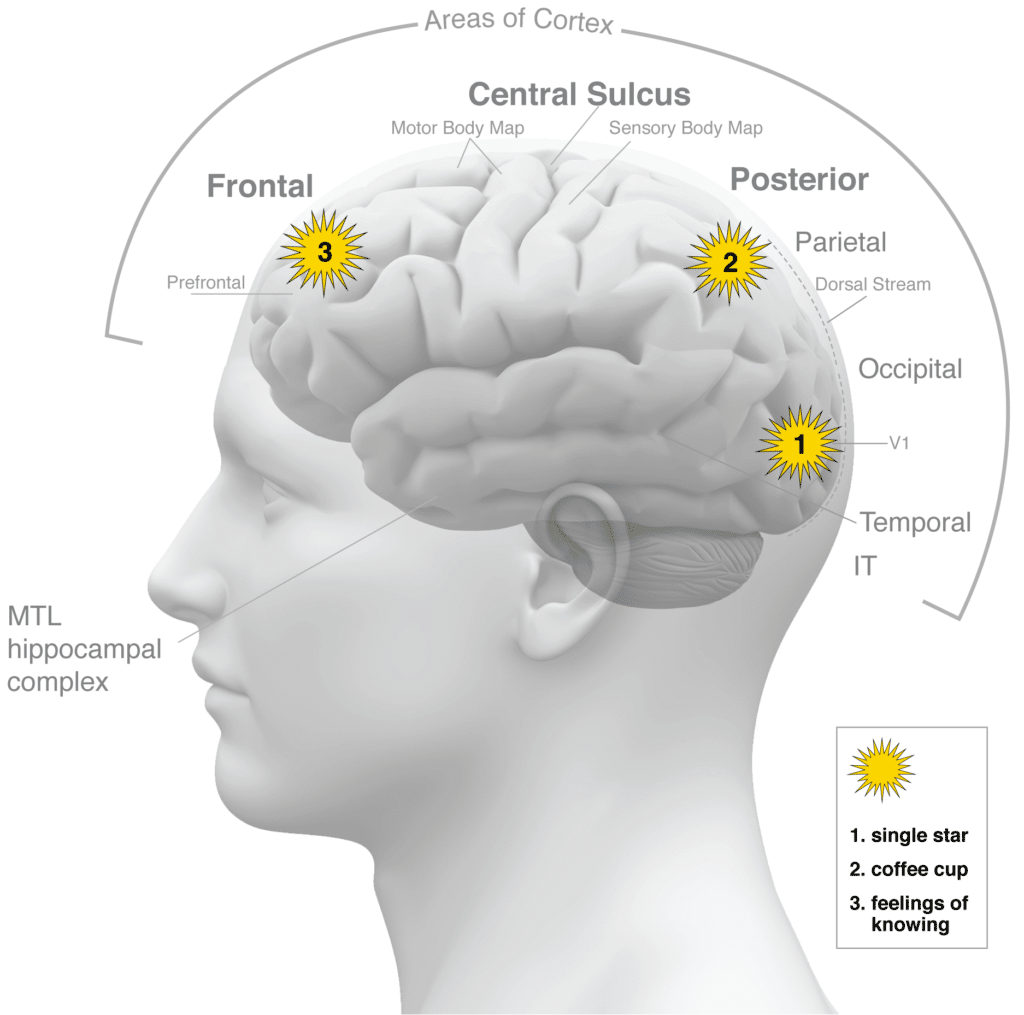
The phrase “cortex is the organ of mind” was written by neurosurgeon Wilder Penfield based on some 1,200 open brain epileptic surgeries in waking patients conducted between 1920 and 1950. Essentially all of Penfield’s empirical claims have been confirmed in the long wave of advanced neuroscopes of the last 20 years.
The question of whether some non-human animals are capable of awareness has vexed psychologists, neuroscientists, and philosophers of mind for many decades.
Because the cortex is very prominent in mammals, there is not much scientific debate about conscious mammals anymore. Other species, like birds and reptiles, have a very similar structure called the “pallium” but biologists are now proposing that we should change that word “pallium” to cortex (Jarvis, E., Güntürkün, O., Bruce, L. et al., 2005).** When we do that, most of the large brained animals we know seem to be conscious.
In these video seminars we will discuss animal consciousness.
A comparative biology framework is suggested for investigating subjectivity. Since we know more about humans than any other animal species, we start with human beings as a benchmark. Humans can give us accurate reports about their conscious experiences, and other animal species can do similar tasks, in the form of trained behavioral output. All these species show similar circadian sleep-waking cycles.
This view reflects the thinking of many biologists.
*Lane, R. (2020). Steven Laureys: A clinical focus on consciousness research. The Lancet, 396(10264), 1719. https://doi.org/10.1016/S0140-6736(20)32477-6
*Panda, Rajanikant & Thibaut, Aurore & Lopez-Gonzalez, Ane & Escrichs, Anira & Bahri, Mohamed & Hillebrand, Arjan & Deco, Gustavo & Laureys, Steven & Gosseries, Olivia & Annen, Jitka & Tewarie, Prejaas. (2021). Disruption in structural-functional network repertoire and time resolved subcortical-frontoparietal connectivity in disorders of consciousness. 10.1101/2021.12.10.472068.
**Jarvis, E., Güntürkün, O., Bruce, L. et al. Avian brains and a new understanding of vertebrate brain evolution. Nat Rev Neurosci 6, 151–159 (2005). https://doi.org/10.1038/nrn1606
The issue of animal consciousness, which is now wide open, at least for animals with cortex, includes mammals, amniotes, probably fish (lampreys and perhaps zebrafish), but also creatures with a so-called “pallium,” which does not look like cortex in gross anatomy, but it is wired up like cortex histologically. Ann Butler, Harvey Karten and others published a consensus article proposing that the word “pallium” should be dropped for birds and reptiles, and “cortex” should be used instead (Jarvis, E., Güntürkün, O., Bruce, L. et al., 2005).
ASSIGNED READING
Here is another opportunity to download and read this Trends in Neuroscience paper by David Edelman and Anil Seth (2009), as it will be the main focus of these discussions, focusing on slides of the main points in each lesson of Part I.
Click to download the PDF:
Edelman DB, Seth AK. Animal consciousness: a synthetic approach. Trends Neurosci. 2009 Sep;32(9):476-84. doi: 10.1016/j.tins.2009.05.008. Epub 2009 Aug 26. PMID: 19716185.
Related Reading: Edelman DB, Baars BJ, Seth AK. Identifying hallmarks of consciousness in non-mammalian species. Conscious Cogn. 2005 Mar;14(1):169-87. doi: 10.1016/j.concog.2004.09.001. PMID: 15766896.