
Welcome
Welcome to the Course!
In a very long tradition, we salute the conscious self in you from our own conscious selves.
Namaste!
A 12,000-year-old Shaman burial from the southern Levant (Israel).
Sacred figures surrounded by animals are a very common theme in ancient burials.
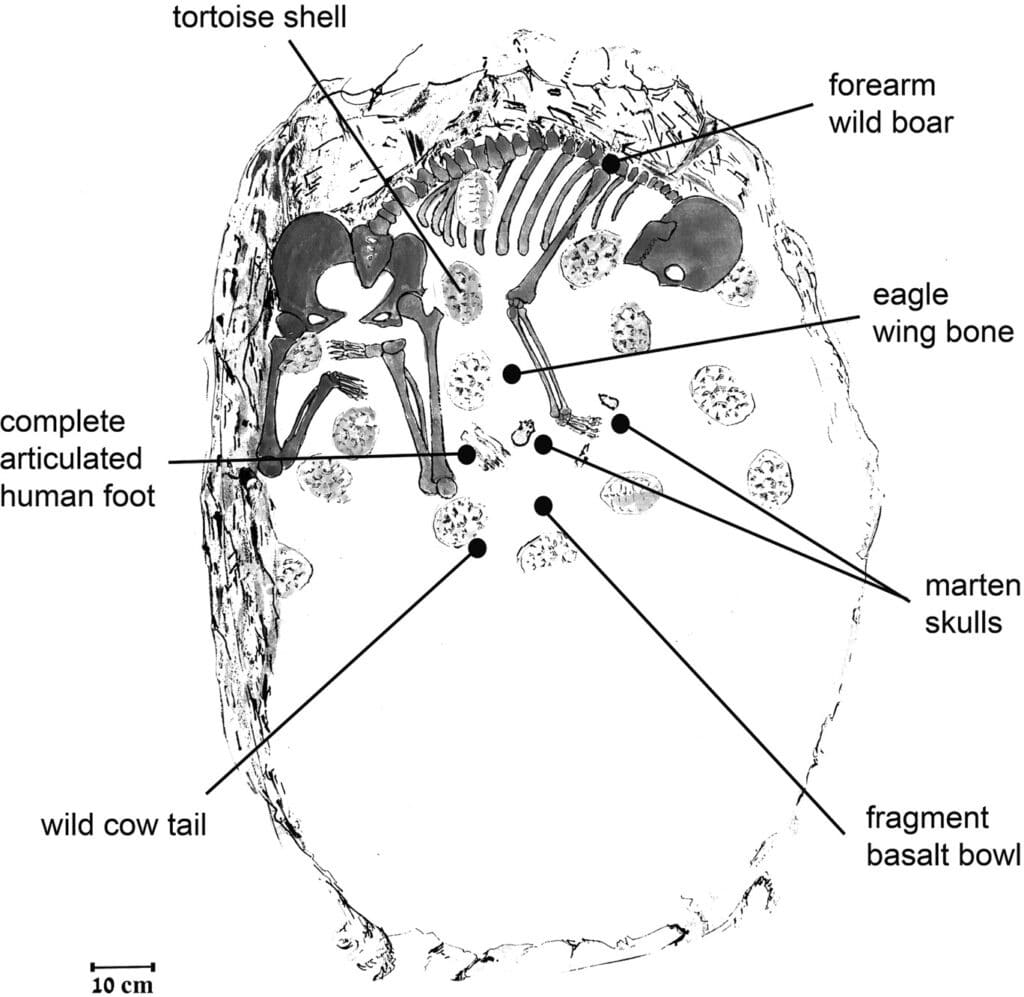
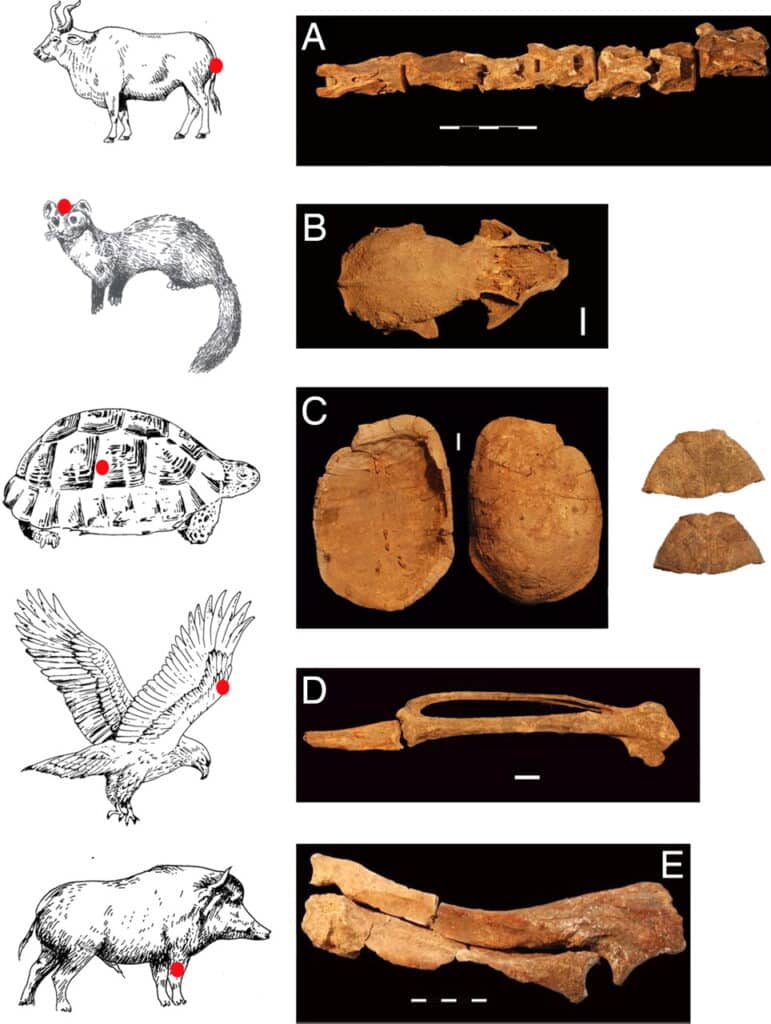
The objects accompanying the burial are also typical of shaman burials. Tortoises, cow tails, eagle wings, and fur-bearing animals continue to play important symbolic and shamanistic roles in the spiritual arena of human cultures worldwide today [e.g., (28)]. It seems that the woman in the Natufian burial was perceived as being in a close relationship with these conscious animal spirits.
A belief in animal consciousness seems to be very ancient and very widespread in the world.
This is not some philosophical speculation. It is now supported by numerous archeological findings published in peer-reviewed journals that are easily found in web archives. How can we understand the evidence?
Consciousness is a part of nature, and we now have clear evidence about the “organ of the conscious mind,” the cerebral cortex (in mammals). Broadly speaking, sensory perception is often conscious, while “stored memory traces” are not. Endogenous senses like inner feelings and visual imagery are also conscious, perhaps more vividly in children.
The most relevant studies compare matched conscious and unconscious conditions, aka “contrastive analysis,” and that has allowed us to pinpoint the location and processes that give rise to visual consciousness, for instance. The conditions that are compared include waking vs. sleep, waking vs. coma, but, also, conscious and unconscious events within the waking state.
Your eye movements are mostly unconscious, and yet they are very intelligent and purposeful. The same thing is true of other animals. The most dramatic evidence is the cerebral cortex which exists in all mammals, and which is the “organ of the conscious mind”.
We hope you enjoy these seminars, and maybe at the end of this course you might think of other animals in a new way.